

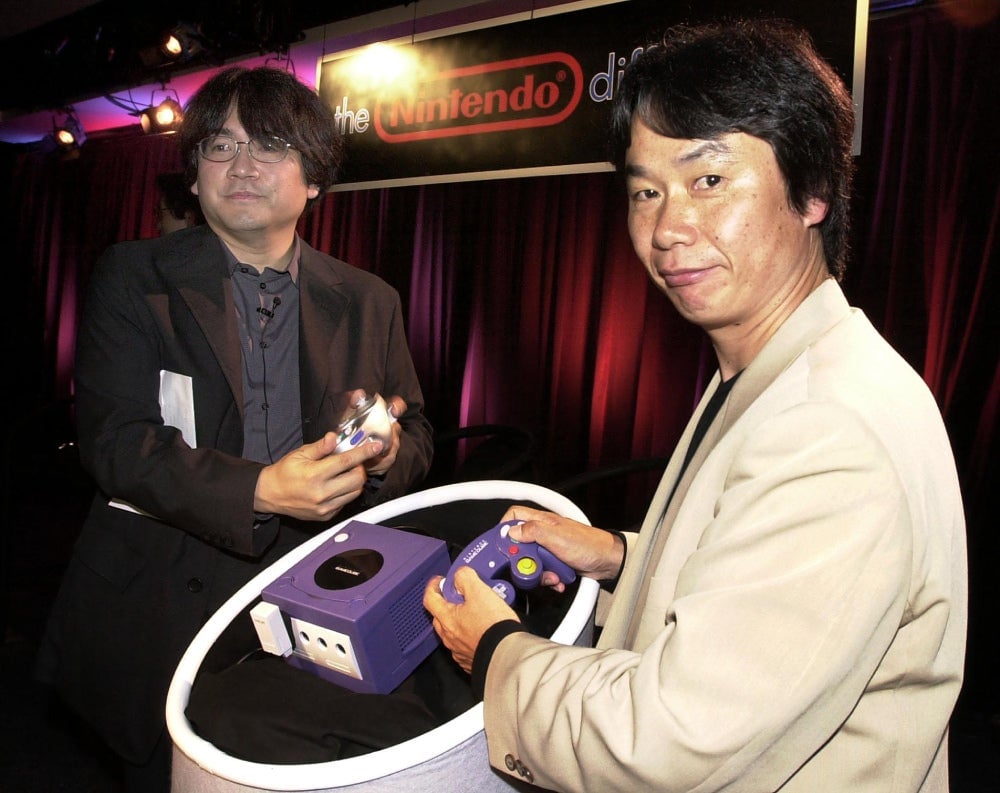
On September 14, 2001, the GameCube went on sale for the first time in Japan. Two months later, on November 18, the console was released in North America. Can you believe it’s been twenty years?
Facing off against the PlayStation 2 and the Xbox, the GameCube was the first Nintendo console to use optical discs—though, the console wasn’t designed to play DVDs or CDs like its rivals could. At the time, that feature was a selling point (I know it was one reason my then girlfriend, now wife, wanted a PS2). The Japan-only, very shiny Panasonic Q version of the GameCube did include a DVD player, but it was discontinued after only a few years.
While the console was no all-inclusive living room entertainment hub, the GameCube did the video gaming part extremely well. It boasted a solid library, including Super Smash Bros. Melee, Metroid Prime, Pikmin, The Legend of Zelda: The Wind Waker, Super Mario Sunshine, Luigi’s Mansion, Chibi-Robo!, and The Legend of Zelda: Ocarina of Time, among many others. Those included third party exclusives like Star Wars Rogue Squadron II: Rogue Leader as well as Metal Gear Solid: The Twin Snakes, which was a Metal Gear Solid remake co-developed by Silicon Knights that featured new cutscenes by filmmaker Ryuhei Kitamura of Godzilla: Final Wars fame.
(Interestingly, it was the first Nintendo console to not launch with a game that featured Mario!)
The console was also home to one of the big fan controversies of the mid-2000s when the GameCube exclusive Resident Evil 4 was ported to the PlayStation 2. Director Shinji Mikami had signed a deal with Nintendo out of concern about the future of the gaming industry, because both Sony and Microsoft had released consoles as a side business, and it wasn’t clear if they were in for the long haul. “At the time, I was thinking, ‘Well, Nintendo might be the only one left in the future that would have games for people — not just children, but also adults.’ That was the thinking at that time,” Mikami told Variety late last year. “And so I was wrong completely.” Infamously, Mikami offered to put his job (and life) on the line to keep the game a GameCube exclusive. He now acknowledges the multiplatform release was “probably the right thing to do.”
One of the most lasting legacies of the GameCube has been its controller. This is a design so good—so perfect—that Smash pros were getting their old ones repaired and that Nintendo even re-released it just for Super Smash Bros. Ultimate for Nintendo Switch.
Nintendo launched the Wii in 2006, and a year later the previous-gen console was discontinued. The GameCube wasn’t the success that Nintendo hoped, but it occupies an important place in game console history. Happy birthday, GameCube!


