
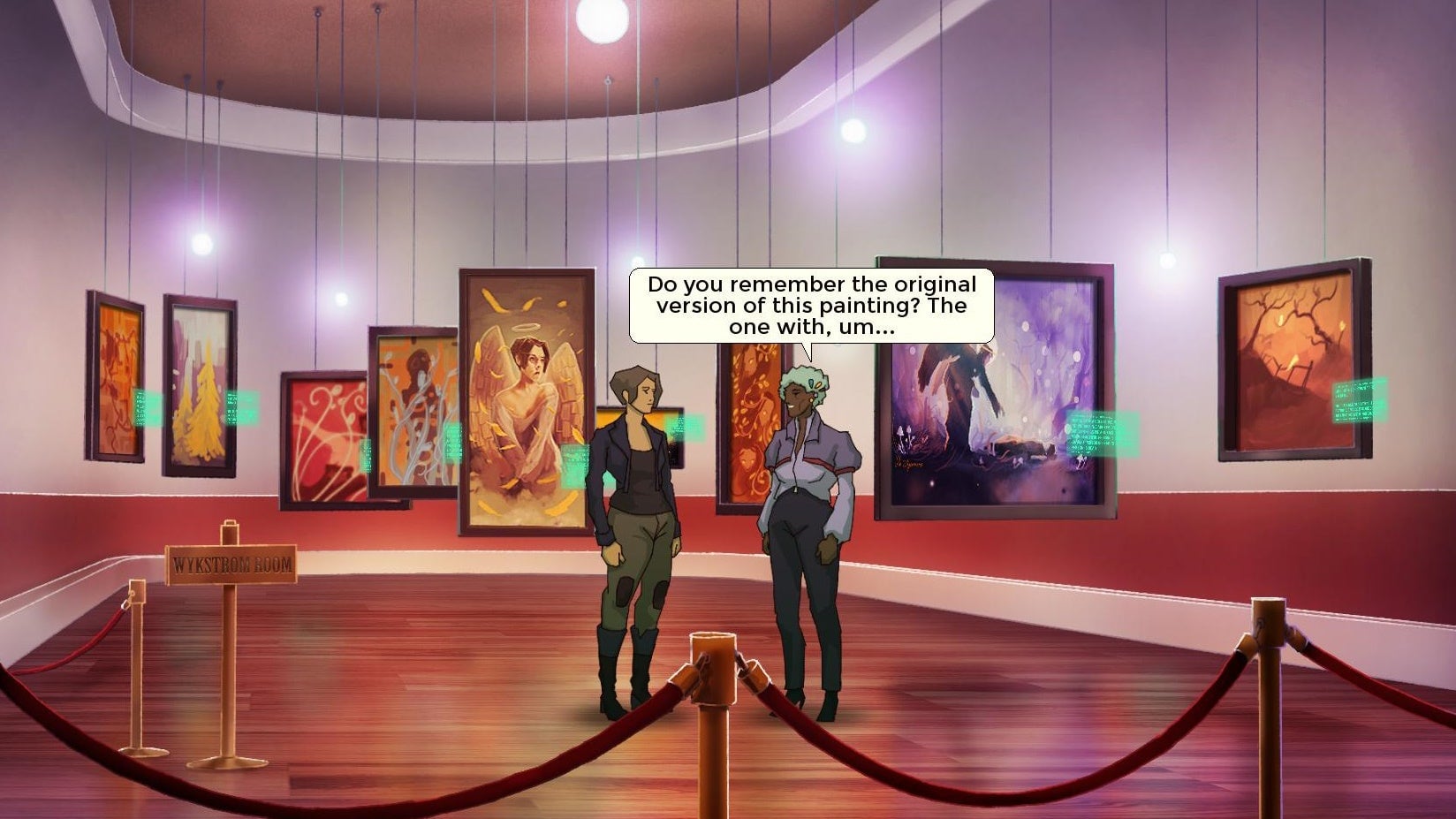
Seven years ago, Wadjet Eye Games released Unavowed, a point-and-click adventure that took the industry by surprise. Incorporating ideas from BioWare RPGs, this was a game in which the companions you took with you for any mission changed not only how the puzzles were solved, but how the story was told. It was magnificent, and received wide acclaim. Wadjet Eye’s follow-up game, some seven years later, is Old Skies, and while its structure takes a more traditional shape, it’s a boldly ambitious, constantly inventive piece of masterful storytelling.
As I began playing this time travel adventure, written and programmed by Dave Gilbert, I was waiting for the twist. It’s 2062, and Fia Quinn is a time agent for ChronoZen, a corporation that takes wealthy clients back in time, while maintaining government-mandated control of the timeline. In seven chapters featuring seven different clients, you visit various points during the last few hundred years of New York’s history, encounter surprises and twists, and solve puzzles through your inventory and conversations. The longer I played, the more I realized a twist wasn’t coming, and the more I realized how grateful I was for that.
“It took me a while to get over the burden of expectations,” Dave Gilbert told me over a video call this week. “[Unavowed] exceeded every expectation, sales-wise, review-wise, and there was that pressure to meet it or exceed it. It was paralyzing.” Eventually Gilbert, who is the primary developer on his games in collaboration with artists and voice talent, realized he needed to let that go. “Maybe it won’t be as good? I just had to—like—make it. Let it be its own thing and make myself happy.”
I’m pleased to report the result is an enormous success. Old Skies is a splendid adventure game, one that explores its central conceit from seven different angles, packed with the character-focused pathos that long-time players of Wadjet Eye games will have grown to expect, and newcomers will find refreshing. It’s reductive to describe it as “straightforward” simply because it (somewhat ironically) tells a linear tale, because it’s enormously complex in its narrative and worldbuilding, but in the absence of a twist it’s just some damned good storytelling.
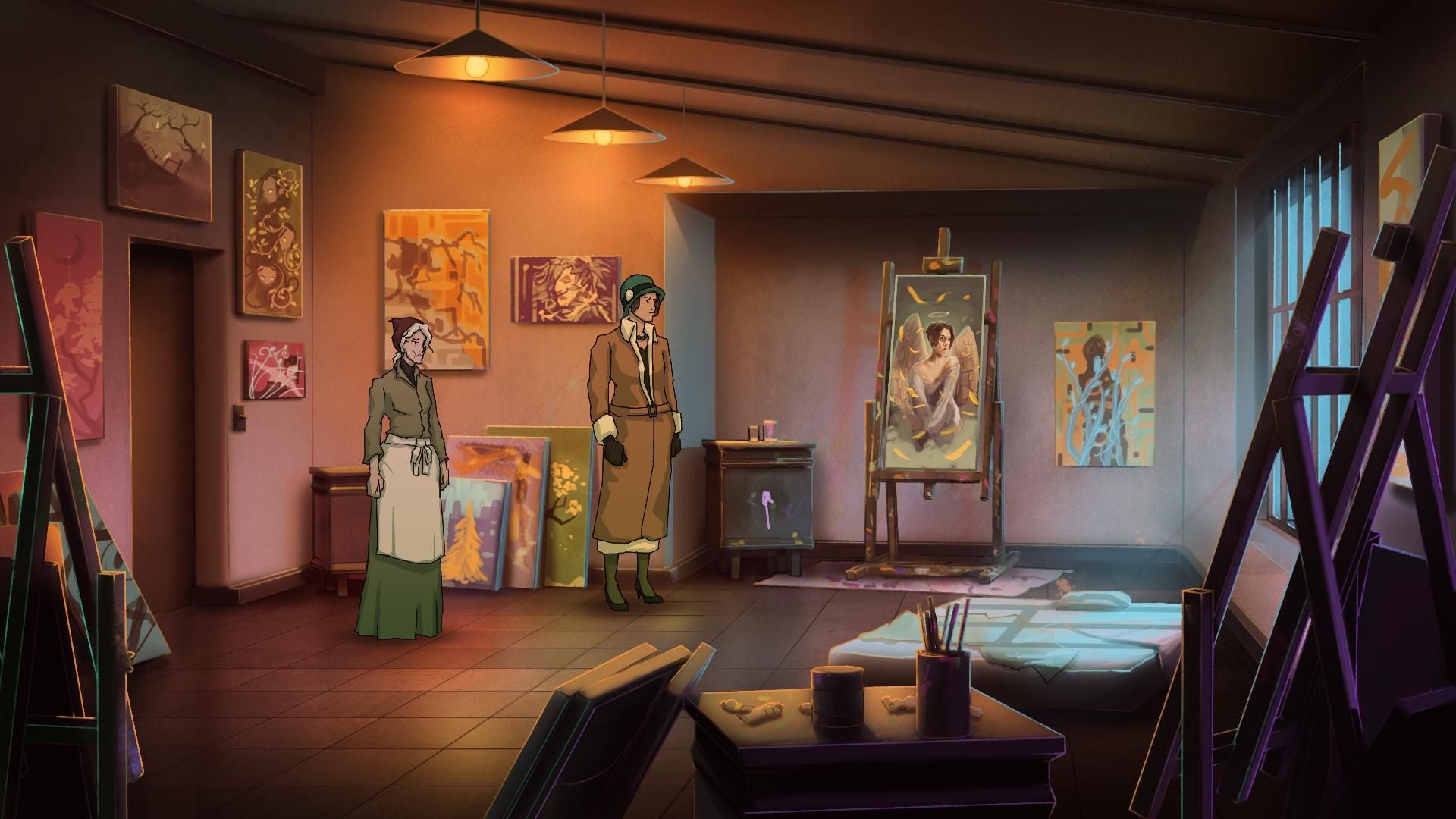
Looking back though Gilbert’s catalog, his games have always been about the intricacies of personality, about how the world affects its characters, rather than how its characters affect the world. Since 2006’s The Shivah—an intimate piece on the crisis of faith suffered by a Rabbi—this is how Wadjet Eye games have shone, and it’s the case once again for Old Skies. This is a game set in a future world that’s ever-changing because of the actions of time travelers in the subjective pasts, but it’s a game about Fia Quinn, a person usually detached enough to be able to work within this constant impermanence, but now finds herself affected by her encounters.
Gilbert spent a full year trying to make a game that, while focused on the same time travel concept, had vast consequences, an epic in which the present-day world to which Fia returns is destroyed, and she must explore the past to discover the cause and save the world. “I found it impossible to focus on,” Gilbert told me. “It being 2020 probably had something to do with that.”
It’s easy to see from the outside what the issue was: he’d flipped his perspective, and was trying to make a game about a world rather than the person experiencing it. But then, who could operate normally in 2020? What’s so fascinating in this finished product is how its origin during an international crisis of existentialism is still so powerfully there, but now it’s reflected in an intimate, insidious sense of…malaise.
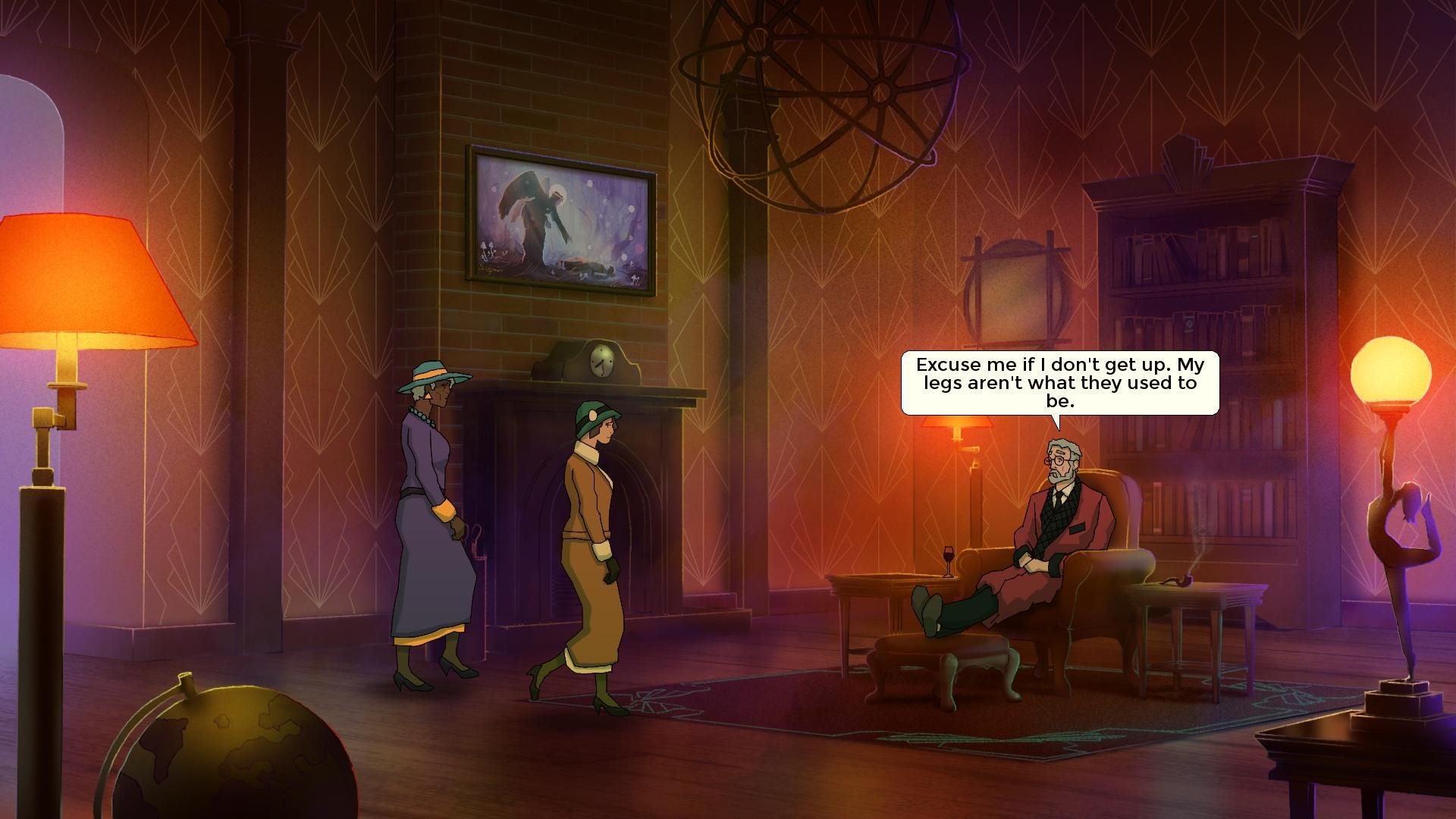
“Malaise” is a core concept of Old Skies, a game that’s also about love, loss, recapturing the past, and breaking free from constraints. Malaise is a term used by ChronoZen’s time agents to refer to a well-known side-effect of the trade, of being a person who can spend days helping a client relive a favorite moment, or put right a time-inconsequential regret from their past, only to return and find some other past change has just entirely wiped the person they were out of existence. Indeed, who the agent themselves is understood to be by the world is constantly changing. At one point, Fia receives a furious phone call from a husband she’s never heard of demanding to know why she isn’t looking after children she’s never had.
That malaise seeps through to the player in the best possible way, the sense of the inconsequential nature of so much of reality often being heartbreaking, but sometimes being coldly nonchalant. When I put this to Gilbert, he reminds me, “Is it obvious that I designed this game in 2020? That I’m releasing it during Trump’s second presidency?”
You may be wondering, in a setup this complicated, how the game deals with the rules of time travel. So often in the sci-fi niche, we’re bombarded by instructions, of the vital importance of not changing anything, of protecting the relative present at all costs. Old Skies is peculiarly liberating in its freedom from this, set in a world where—for a few years after time travel became possible—there were no rules, until some government regulation became vital. Certain events were ordained absolutely critical, and people are all designated by their significance to the timeline. It’s morally abhorrent, and very freeing. Some manner of wibbly-wobbly timey-wimey sci-fi magic imbues some events, places, and people with permanence, but the rest of the past is up for grabs for those rich enough to afford to travel to it. And then there’s the somewhat arbitrary ruling that meeting oneself causes both of you to melt.
One fixed event in time is September 11, 2001. In the game up until this point, you have experienced stories about people wanting to address regrets, or ask questions of the long dead, but at points in history that are fairly inconsequential to the story. The 9/11 chapter is even more striking because the time it’s set in is so central to the story it’s telling, let alone because this is territory that gaming has otherwise not dared to tread. For Gilbert, who lived in New York in 2001 and saw the World Trade Center on fire, it’s an incredibly personal story, and one he felt ready to approach.
Crucially, this chapter is not about the terrorist attack at all. It’s a separate story about an unsolved murder, the body found the morning of the attacks. A police detective wants closure, wants—for very personal reasons—to solve a crime that got lost in the ensuing events. And what soon becomes clear is that she in fact wants to prevent the murder from happening at all. So it is that the chapter plays out on September 10, and for various reasons, also skips ahead to a month or so later. “I couldn’t bring myself to show the event itself,” Gilbert says, remembering how that day he was on his way to his grandmother’s funeral when he drove past the burning Twin Towers. “I didn’t trust myself to be able to handle that. Having gone through it, I was able to infuse a lot of my own experiences in the way the characters talk about it. Yvonne [a character in the chapter] says, ‘It looked like giant, flaming cigarettes.’ That’s what I thought when I first saw them. That was what entered my head.”
What makes this even more bold is that this is a chapter about police corruption, set at a time when the NYPD was held with an almost holy reverence. The game is brave enough to explore this, sensitively to the tragedy, but bold and forthright about the reality of the police. This is helped by it all being seen through Fia’s perspective, which as Gilbert points out, is utterly unlike our own. She’s living 60 years after the event. “It’s like talking about the Hindenburg, or the Titanic. It’s ancient history for her.”
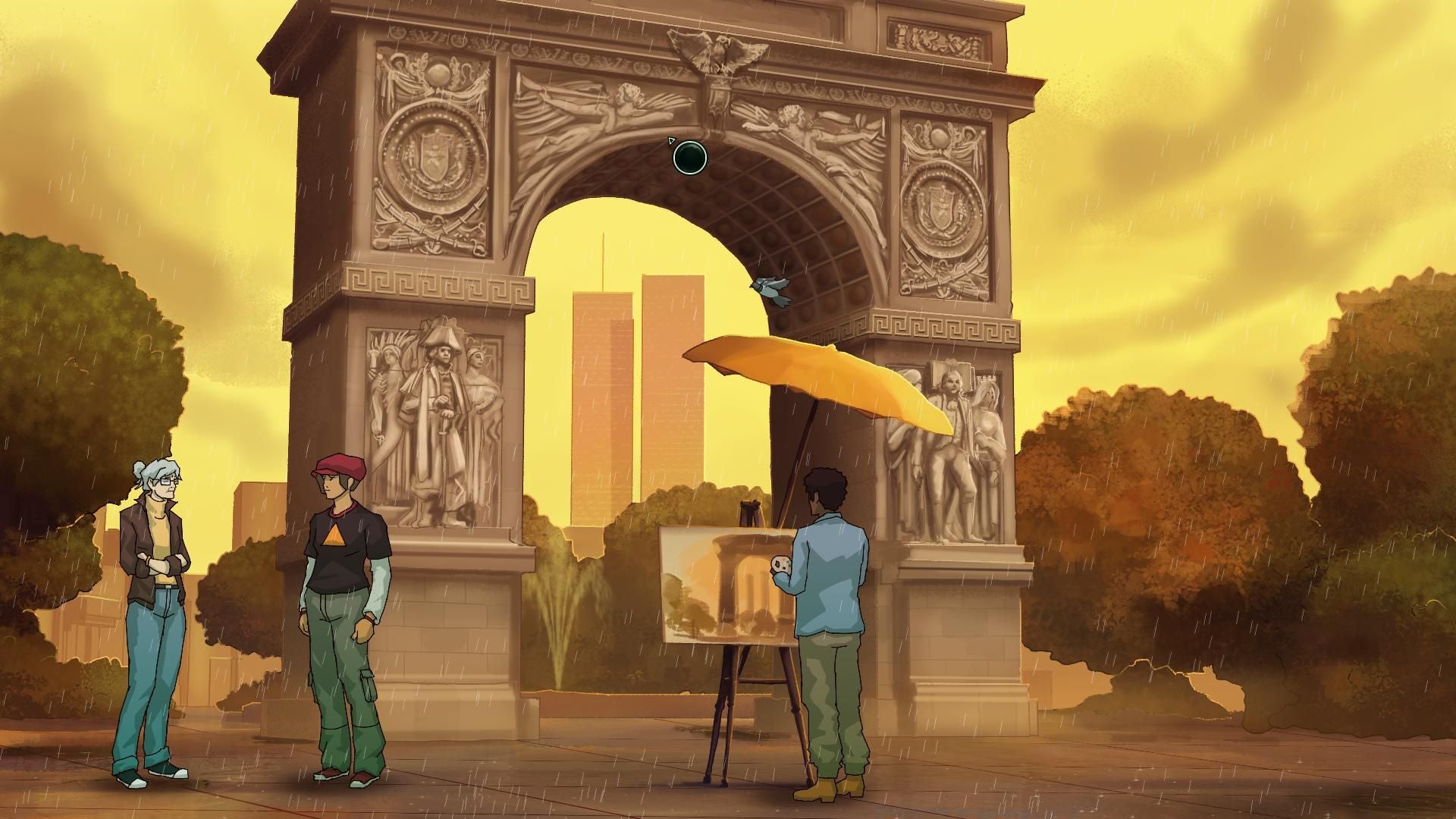
Once again, it’s an excellent example of how the game focuses on the specific minutiae of the characters, rather than the world around them—the game has no desire to proselytize about the attacks or the response, nor does it want to perform obsequious reverence, but rather to talk about how a handful of people experienced the horror of the moment. And a murder that took place. And various forms of corruption. And…love. “Weirdly enough,” Gilbert says with half a grimace, “I created a love story with the backdrop of 9/11. Took me by surprise. Sometimes things just don’t go where you expect them to.”
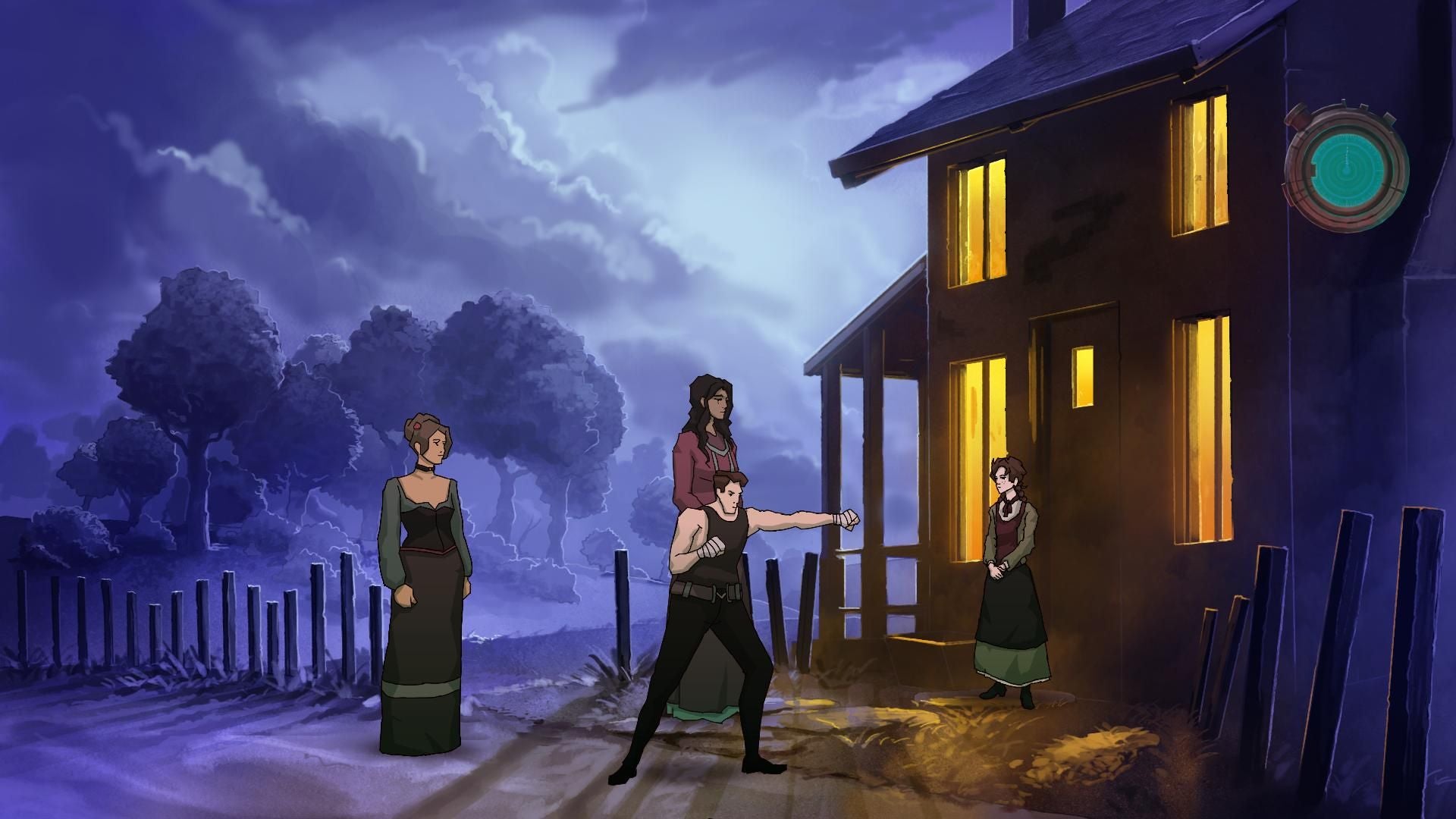
That’s certainly true of my own experience of the whole game. What strikes me most having finished the lengthy adventure is how many memories I’m left with. Often, when I finish a game I enjoyed, I’ll remember it almost like a vacation I’ve been on. I’ll think back to a significant moment with fondness, with that warm memory of being somewhere enjoyable. With Old Skies, I realize I have multiple memories, as if I’ve been on a string of holidays. There’s that tale of old-timey boxing matches, and that time I was infiltrating the vertical farm laboratories, and when I tried to discover the identity of a mysterious 1920s painter.
While the game has a strong arc, and a very satisfactory conclusion that I absolutely did not see coming, its individual chapters are so strikingly different as to feel like unique adventure games. So much so that as each chapter ended with its own rewarding conclusion, I found myself thinking, “That would be a very satisfying ending to this game,” and then being delighted to find it was carrying on, that I was going to get to experience a whole other story.
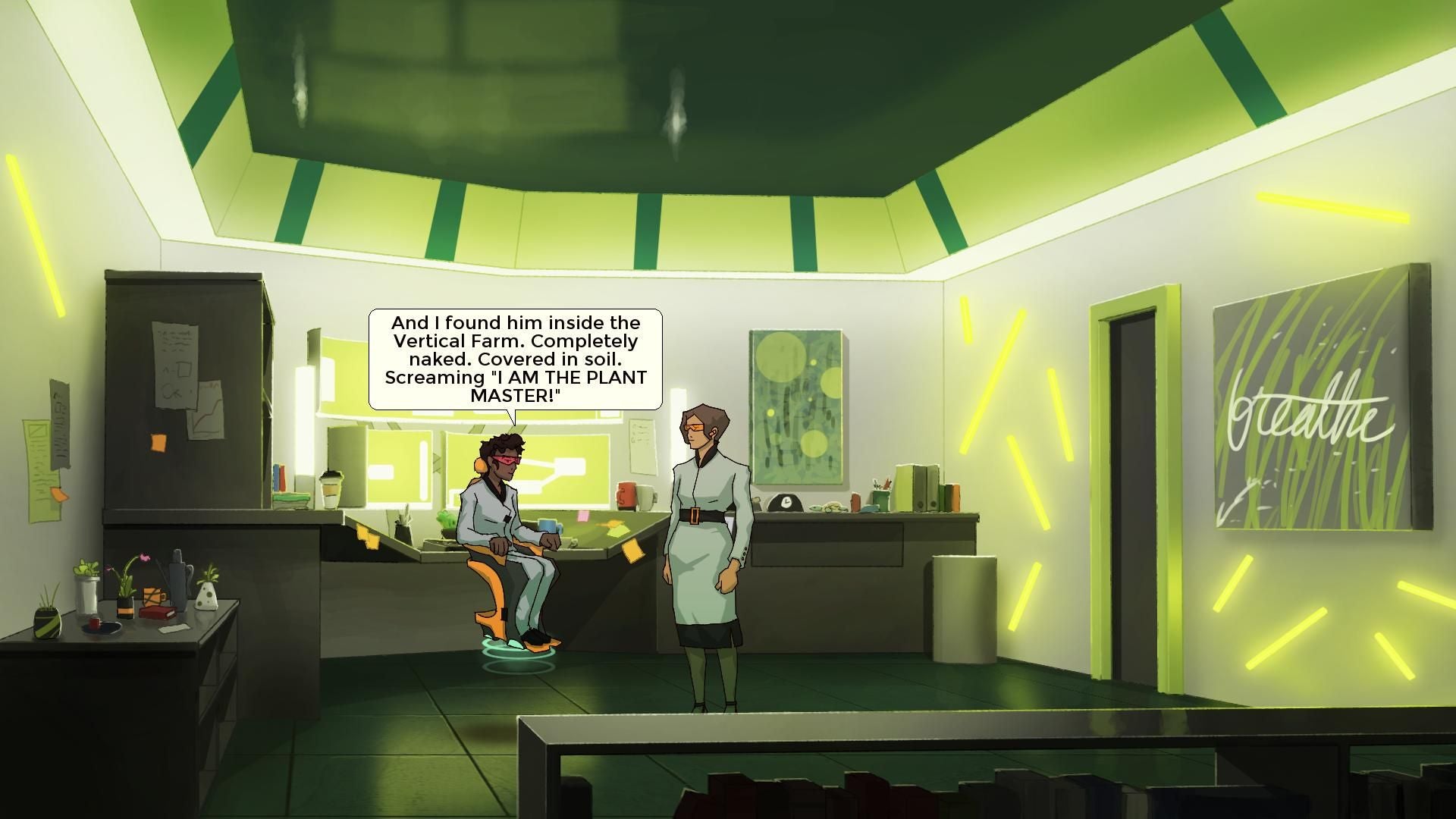
Old Skies is a tremendously enjoyable game, one that makes a big graphical change from the catalog with regular artist Ben Chandler creating hand-drawn animations for its host of characters instead of his traditional pixel work. I wasn’t sure about that shift when I started, but became extremely convinced a short while in. It also has, as is always the case for the developer, fantastic voice acting and direction—I hadn’t been convinced by the vocal portrayal of Fia when I played the demo, but I was absolutely wrong, and completely love it now. Context plays a massive part here, and Sally Beaumont’s performance entirely won me over. It’s an all-round great cast, but I want to especially call out Chanisha Somatilaka for her portrayal of Yvonne, a favorite character of mine.
While Old Skies is a more “traditional” adventure game than Unavowed, it does the game a disservice to leave it at that. This is a hugely ambitious game, perhaps even seven different games combined into one, repeatedly reinventing its approach to its central conceit throughout. And it’s one that’s stuck with me, one I keep thinking about days after I finished playing.
Old Skies is out today for PC, Mac and Linux on Steam and GOG. A Switch version has been delayed.


